Sensitive data refers to any information collected from customers that the organization should keep confidential. It can be a photograph, a recording, a video, a document, or a form filled out on paper or online. In a recent study, 9,478 publicly disclosed incidents and 35,900,145,035 known records were breached as of May 2024. Data breaches are predicted to cost the global economy $9.5 trillion.
As a result, it is critical to manage and secure sensitive and personal data. Data compliance laws such as CCPA and GDPR have imposed privacy restrictions on organizations that collect personal information from customers. Businesses that gather personal information must update their privacy and security policies.
This article will discuss why data exposure occurs and the best practices for securing and controlling sensitive data.
Why does Sensitive Data Exposure occur?
A lack of data maintenance can result in sensitive data exposure and breaches. They occur when sensitive data is unintentionally or illegally deleted, lost, changed, or unauthorized disclosed or accessed due to a security event.
Various factors may induce data exposure. Risks include human error, malware, online assaults, system invasions, cloud service failures, software vulnerabilities, hardware failure, power outages, denial of service, physical interruptions, and environmental risks
Best Practices for Managing Sensitive Data.
Personal and business data are collected and kept in vast quantities in organizations. This information should not be shared with third parties. Protecting sensitive data is crucial for businesses to maintain compliance and protect their consumers.
The following are some measures a company can use to improve data security.
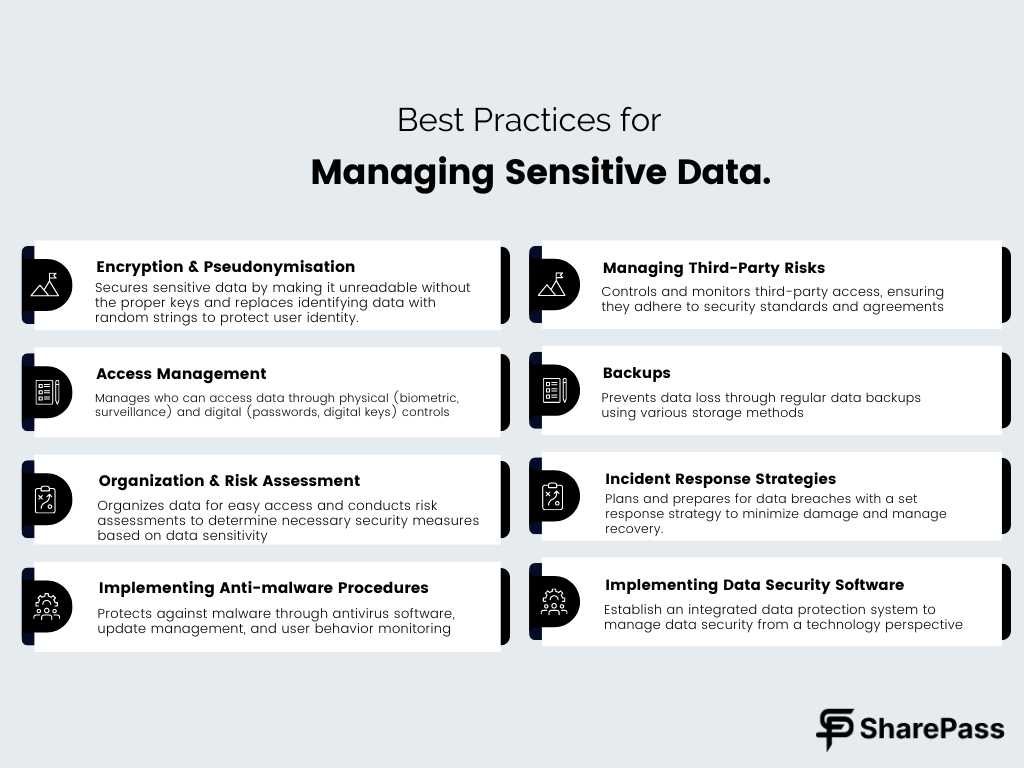
Encryption and Pseudonymisation
Encryption is the technique of making data unreadable and unrecognizable to anybody who does not have the necessary password or key to access it. Encrypting sensitive data makes it impossible to tamper with, and it also prevents attackers from reading or understanding it during a data breach.
The GDPR proposes pseudonymization as a data security approach that works effectively with massive datasets. It includes removing identifying information from data packets. Identifying information about a person, such as names, ages, and DOBs, is replaced with randomly generated strings. The data subject’s identity and the data about them cannot be linked.
Access Management
Restricting access to sensitive data can promote accountability while reducing human carelessness and mistakes. If fewer workers access data, there is less risk of data exposure/breach. A limited number of people should have access to information.
Data access control consists of both physical and digital controls. In physical access, identity management, such as biometrics, controls access to data servers. You can also install alarm systems and video surveillance or isolate your network.
Digital control involves using passwords and passphrases to grant access to specific individuals.
Organization and Risk Assessment
The first step toward effective data management is organization. Before executing any security strategy, you must arrange all the data you have acquired. Organize the documents on your server/computer/drive so they are straightforward to browse.
The organization enables appropriate risk assessment.
Risk assessment entails assigning a risk rating to particular data to determine the security measures required to protect it.
Data may be either:
- Low-sensitive information: It is information that the general public may read, use, or share, such as information posted on a public website.
- Medium-sensitive data: This information can only be communicated inside an organization and not with the general public. Its disclosure does not have profound effects.
- High-sensitive data: This information is only accessible to the data subject and a small group of insiders. Exposure to this kind of material has severe consequences.
An organization may provide insight into which data should be prioritized for security.
Implementing Anti-malware Procedures
A malware file or code can infect, analyze, steal, or perform almost any function an attacker desires. It may be disseminated by email attachments, corrupted software or websites, fraudulent internet adverts, etc.
The following are some anti-malware strategies you can use in your organization:
- Install antiviral software or VPNs like Surshark or NordVPN to secure your connection.
- Administrator accounts should only be used if absolutely required.
- Update the software regularly.
- Implement spam filtering and email security.
- Check all user accounts for any unusual behaviour.
Backups
One of the most critical steps for avoiding permanent data loss is to perform periodic backups of data. This prevents data loss due to human or technological faults.
Backups will cost companies and people money, but they are worthwhile, given the dangers of losing data. It may take several forms, including tape storage systems, hard drives, and disk storage methods.
Managing Third-party Risks
You must always monitor third parties with legal rights to access your organization’s data. Whether they are trusted or not, they may be vulnerable to unanticipated assaults, so you must prepare for them.
Aside from monitoring them via cloud and physical storage repositories, you must additionally conduct the following:
- Understand the third-party environment, who has access to which information, and who has the authority to exercise certain rights.
- Ensure that any third parties accessing your data have signed an agreement.
- Ensure they are responsible for the data they have access to and that security requirements are followed.
Developing Incident Response Strategies.
Data breaches or sensitive data exposure are usually unanticipated, particularly when a hacker forcibly seeks to access private data without authorization. Organizations must prepare for these incidents in advance, which includes developing an incident response strategy to limit the consequences of such leaks or breaches.
An incident response strategy simply outlines how to manage data breaches or exposure to unauthorized individuals. Regulations like NIST, HIPAA, PCI, and DSS help define an incident response plan’s contents.
Implementing Specialized Data Security Software
Implement an integrated data protection system from a technology perspective. Security software can protect your most valuable assets by:
- Access Control Automation
- Alerts
- Monitoring
- Password Management Audits
Additionally, multiple devices and endpoints may need to be visible from a single location. Using many different IT and security management tools and solutions can slow down processes, increase corporate costs, and complicate data protection.
Conclusion
Properly handling sensitive data cannot be overemphasized. It decreases the chance of a data breach, disclosure, theft, or loss and the heavy penalty for violating privacy rules. Every company must make a concerted effort to be informed about data security. This article highlighted the best techniques for managing sensitive data properly.